After spending the previous afternoon helping to recover a motorhome off the wet grass, today we were in search of seafood. We decided as we had now filled our water tank, we’d head to the Aire in Oualidia itself. We passed probably 10 vans in the 2-3 miles into town and there was probably still nearly 100 motorhomes and overlanders parked up on the Aire. This Atlantic coast continues to be so much busier than the south of Morocco, which was definitely our favourite part so far.

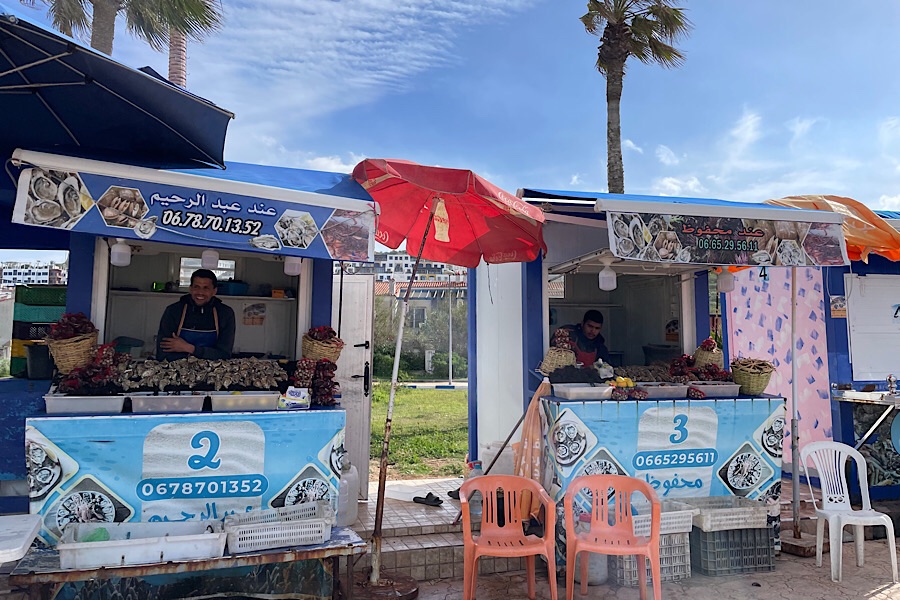
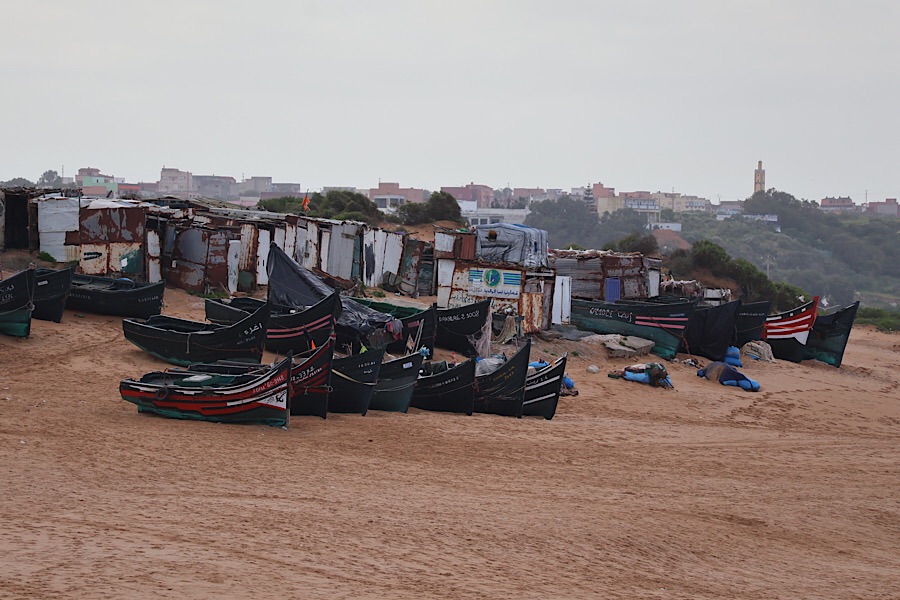

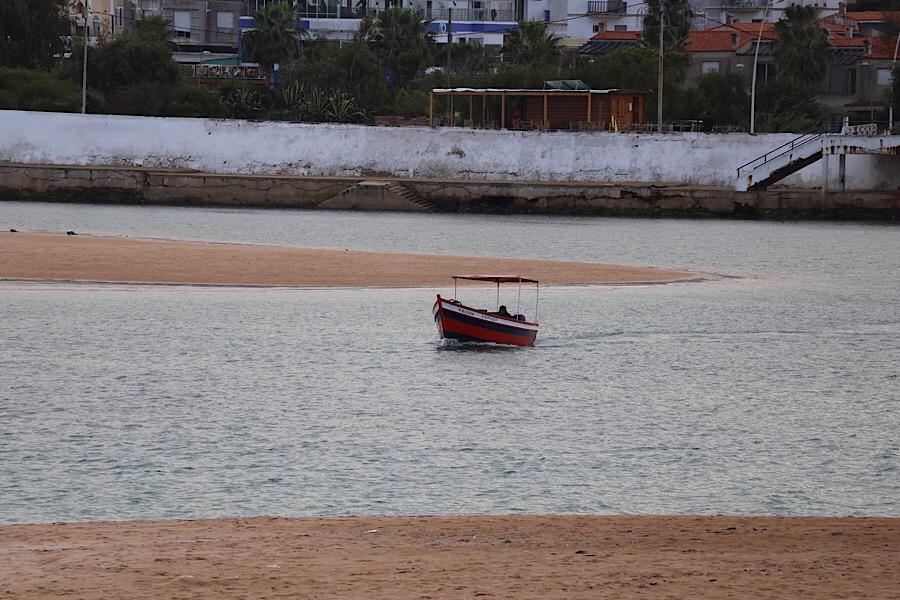
However, we easily got a spot and had a lovely walk along the beach with the dogs and a look at the large lagoon that makes Oulalida so popular with its oyster beds. There are lots of restaurants in the town and many hotels, plus multiple oyster stalls all around. However, as elsewhere, there was a decided lack of ice to maintain the freshness of the seafood which is off putting for someone who has spent a few years in the fishing industry. We opted for lunch in a nearby restaurant instead. Kev had a large platter of local fish which was delicious.

The next day we were due to start our tours of the Imperial cities of Morocco. We headed first for Casablanca, taking our first toll road in Morocco, mainly out of curiosity. It was almost empty for most of the journey, good quality roads and for what we could see modern and frequent service stations. The tolls were pretty cheap and the average speed was considerably improved from local roads.
We took the ring road of Casablanca to a guarded carpark by the coast. Even by Moroccan standards, the roads were pretty stressful, the additional lanes just increasing the number of directions in which you could be cut up.
The carpark was pretty easy to find though and we parked up with about 10 over vans at the back. We were opposite the coast and a wide promenade where there were a constant stream of people taking a stroll in the lovely nearly 30 degrees C weather, which is unusual even for Morocco in January.

We took the girls for a well earned run on the beach after a long drive. However I have never seen quite so much broken glass anywhere, there really is a big litter issue in Morocco. Thankfully the glass was not sharp and the girls were not injured but it was clearly not a beach to take children with bare feet.
We had planned to visit the enormous Hassan II mosque the next day, completed in 1993 with its 210m tower, it is the biggest in Africa, capable of hosting 105,000 worshippers. We were about 6 miles away down the coast. So to while our time that afternoon we decided to wander round the Morocco Mall almost next door to the parking.
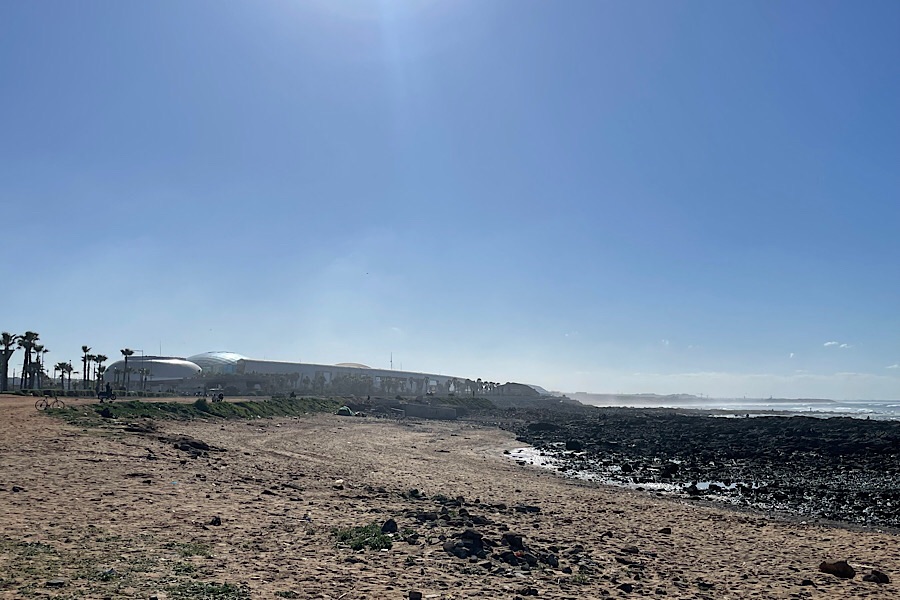
It’s a glittering stainless building, also the biggest in Africa at 590,000m2 of floor space. It also contains a 1 million litre cylindrical aquarium in its centre which is an impressive structure but the large manta ray swimming in circles did not look happy to us. We are not really shopping mall people, Kev was much more interested in the food hall. Although the glittering designer shops were in such drastic contrast to the poverty we have seen elsewhere. It was certainly noticeable how much more westernised it is around Casablanca.

We had the worse night’s sleep of the whole trip that night, even despite the many barking stray dogs of the country elsewhere which we have grown used to. Multiple boy racers racing up and down the road outside literally all night with a motorbike at 3am which must have had a loud hailer built into his exhaust did several laps. We were still awake at 7 am and decided that cities were not the way forward. The traffic out of the city was light but it was already building up coming in to the city. We decided to make a run for it early and skip the mosque tour.
It was certainly the right decision traffic-wise. Even though it was not yet daylight, every roundabout had a policeman directing traffic as clearly the apparent “anything goes” traffic etiquette is not conducive to flowing traffic at rush hour. At least it aided our escape. We decided to skip Rabat too, though it will be on our list for our next trip and just concentrate on Fes, which had been high on my list to see before we came.
As we had made an early start we decided to push on with our travel and we made it to a vineyard who offer free parking and even toilets and showers plus a wine tasting tour. There is no obligation to buy wine, but obviously so many people do that it works out for them. It is called the Hacienda des Cigognes (House of the Storks) and the 4 resident storks resolutely camped on the roof meant it very much lived up to its name.
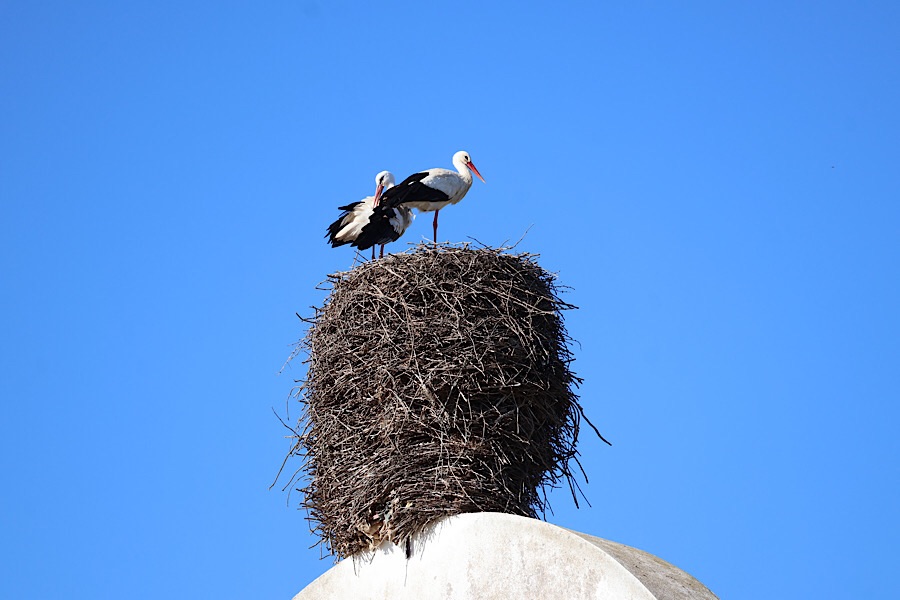
Our hosts Karin and Jalil were so welcoming, insisting that their house was ours and to walk anywhere we wished etc. Having read rave reviews online, we obviously had to book in for tagine in the evening too. We were in early afternoon and thought optimistically we may have the place to ourselves. However, when we awoke from a snooze, to catchup on some sleep from the previous night we found several other vans, who continued to arrive through the afternoon / evening.

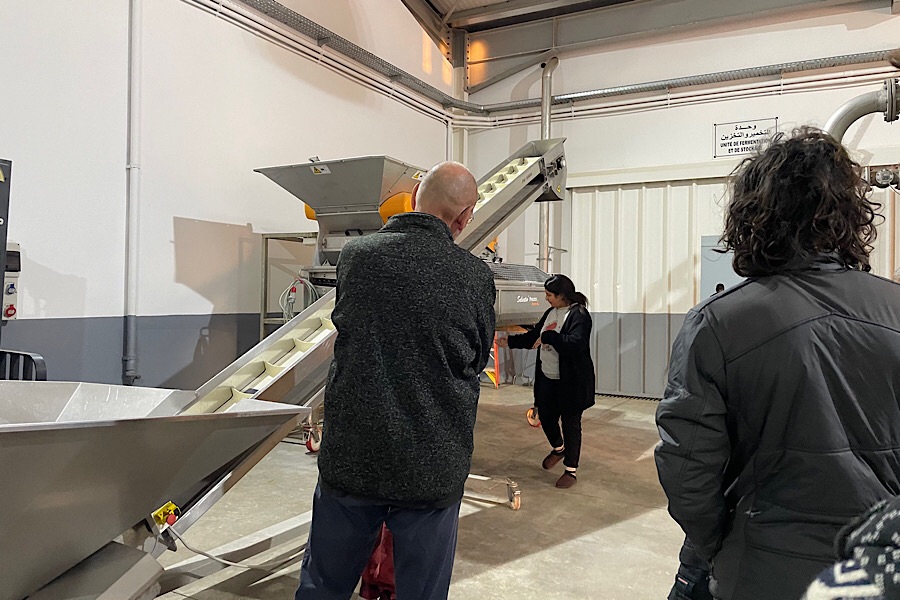
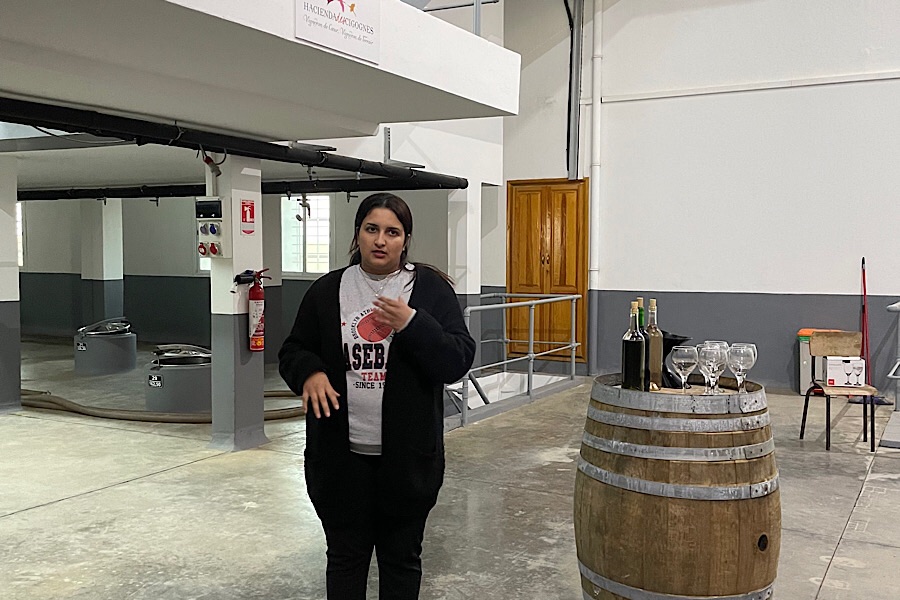
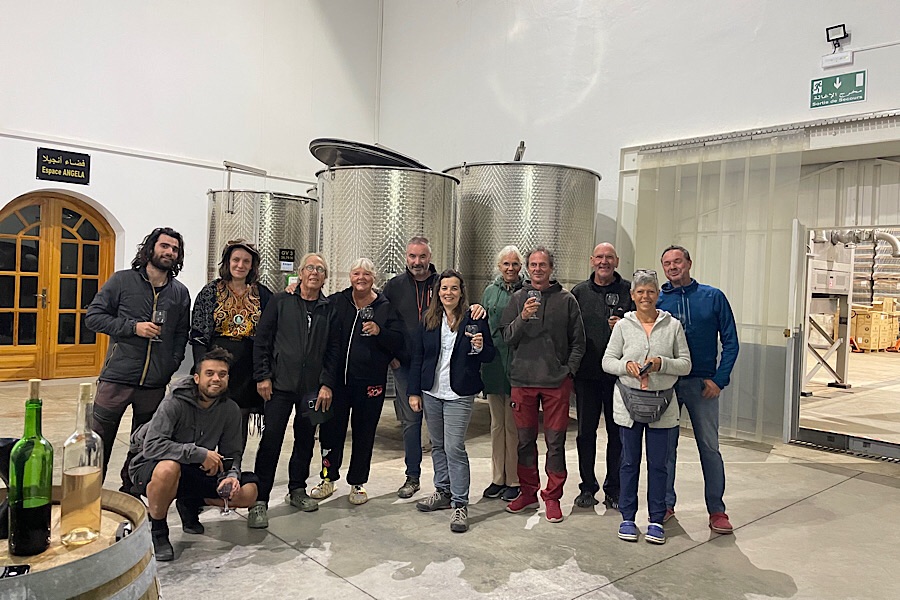


There was therefore quite a crowd of us by the time Jalil came to do our wine tour. It was interesting to hear about some of complexities of producing wine in an Islamic country. Though in fact, perhaps surprisingly, the vineyard is owned and leased by the state. It was certainly good to see a young Moroccan family participating in the industry, which had seemed to be dominated by the French from what we had seen to date. We enjoyed the wine and bought a few bottles plus enjoyed a lovely tagine served in their home alongside some German and Dutch campers. This including a Dutch guy whose name I could not attempt to spell, who has recently retired from a marching band and who offered to pipe us off when we left in the morning. I thought it was possibly the nice bottle of red from the vineyard talking, but to give him his due, he did indeed give us a rousing send off with the help of a couple of campers clamping the tune which was rather nice start to our journey.

We had a slight detour on our way to Fes to see the Barbary macaques in the Cedar forest of the side of the Middle Atlas Mountains. This completed our Atlas mountain bingo as well as giving us a very pleasant scenic drive. We’d read reports of monkeys pulling solar panel cables etc from the roofs of campers and were a little wary of parking too close overnight. Then Kev spotted a site 5km from the forest, near Azrou, which was beside a brand new but abandoned hotel, described by someone we are following as “the best in Morocco”. The dual urns marking the hotel entrance and large archway driveway entrance with beautiful Arabic geometric tiling were very impressive. It’s only as you drive along the long driveway up the hill to the camping at the back, you realise this elaborate building and pools are empty.


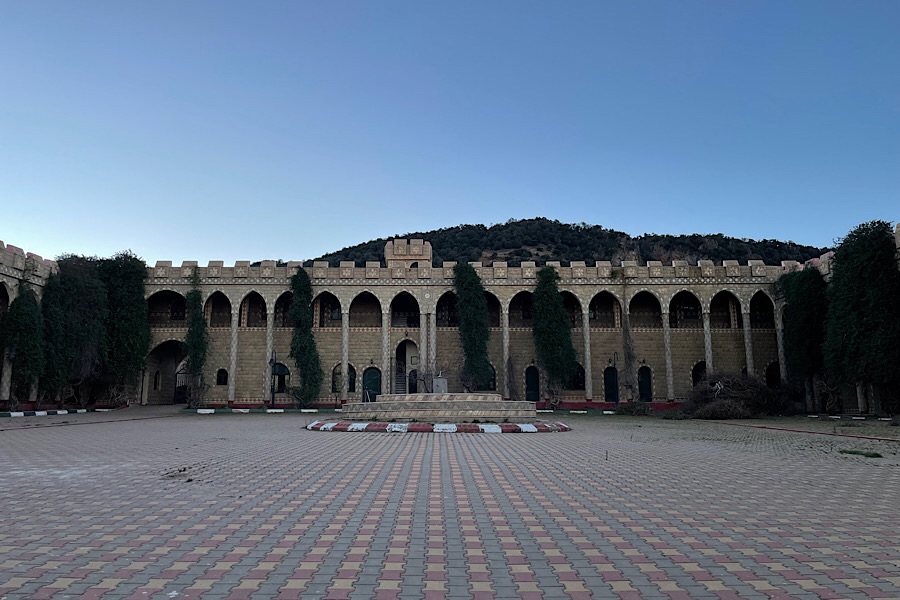
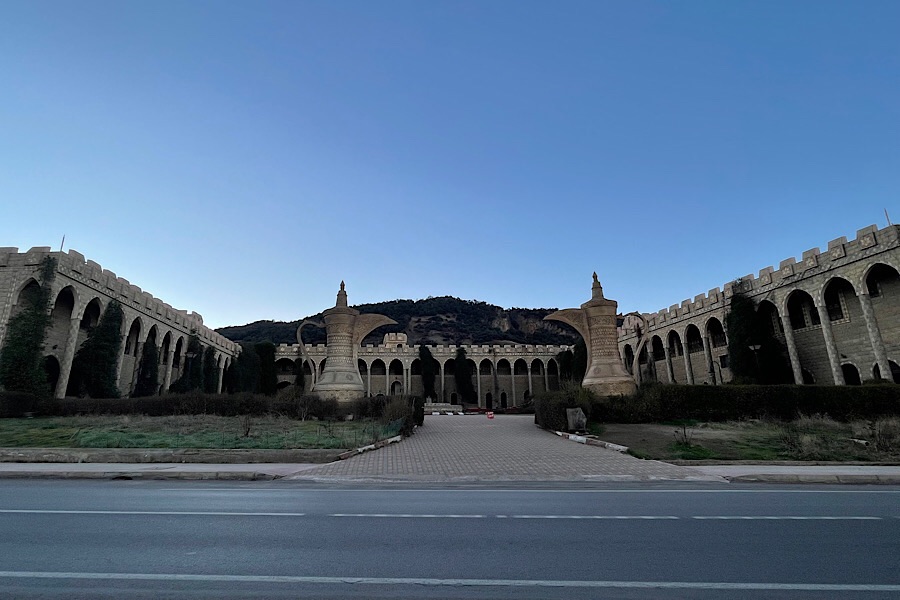
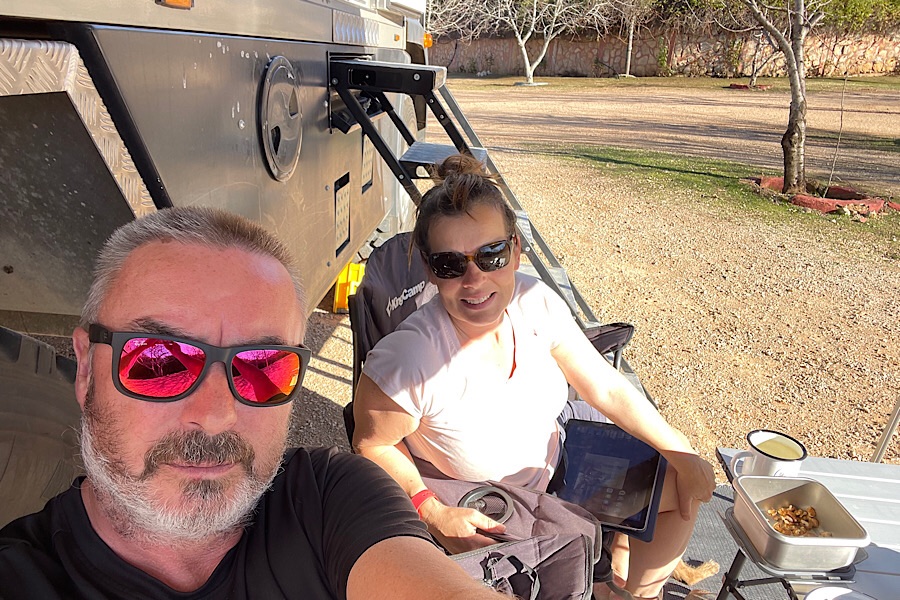
The campsite at the back was however lovely, with fresh bread brought to your door in the morning, resident dog, 2 rabbits and cat with an injured leg, plus boa constrictors and parrots etc in reception! However, there were few visitors mainly arriving in the evening and leaving in the morning. We stayed a couple of nights with only one other van during the day and enjoyed some peace and quiet and sunshine. We even managed to keep Lola from terrorising any of the resident animals, even if the cat did keep trying to sleep on our axles 😱 😱.
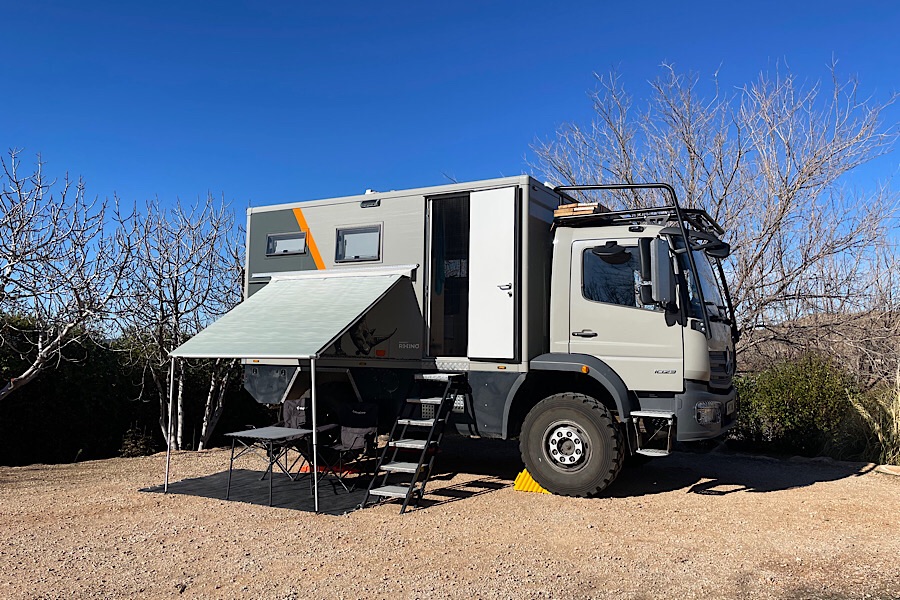
We finally roused ourselves to see the monkeys on the day we left. We decided to drive to the forest after being warned about the number of stray dogs locally on route, which we could certainly validate from their overnight chorus. Within 5 minutes drive, we were at the main carpark and gladly paid 20 dirhams to the guy, who had no doubt bought his own fluorescent tabard, to keep the monkeys off the truck.
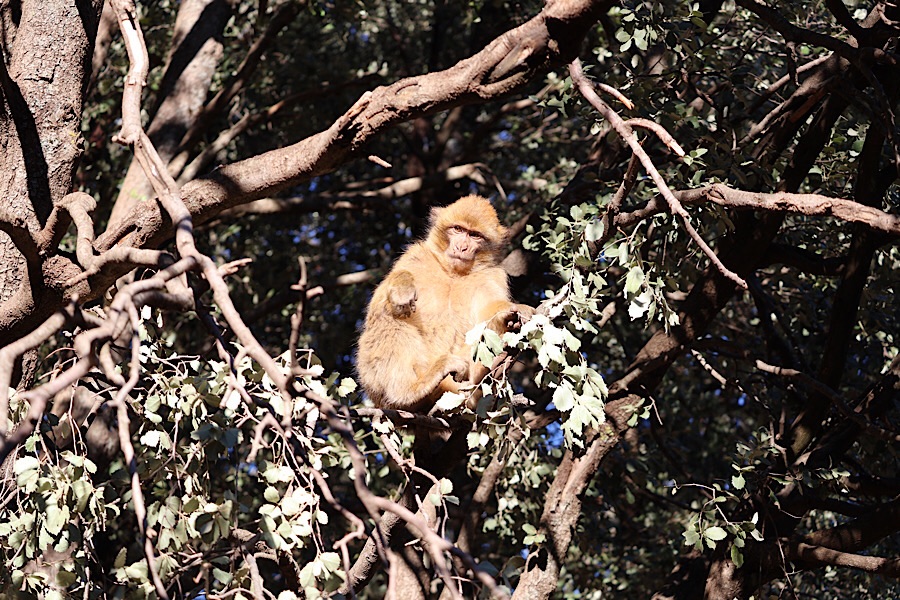
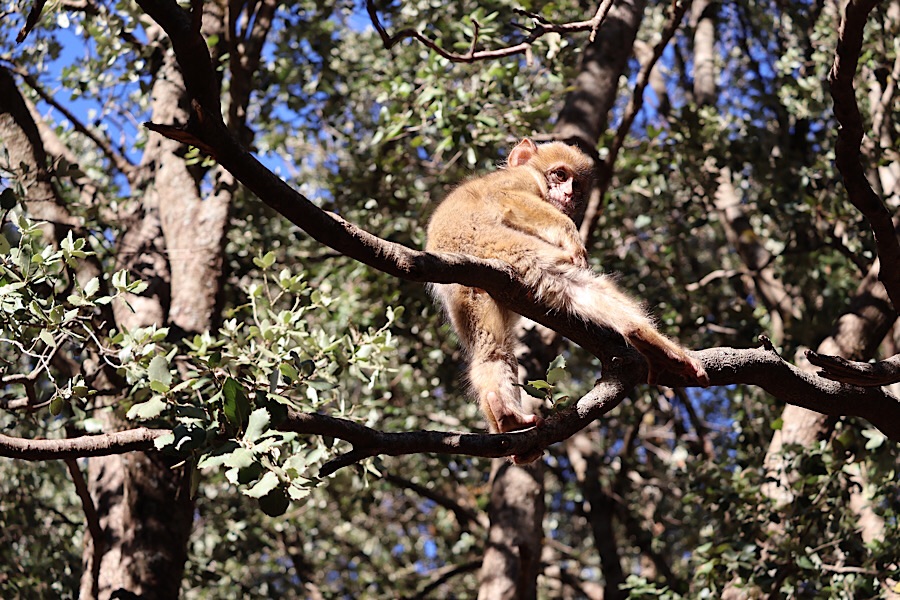
There were lots of macaques, more than we’d imagined. There were big males down to tiny youngsters running around, jumping on bins, in the trees and running across the floor. We bought some peanuts from one of the children selling them. There appeared to be a family who had set up a camp in the woods for this trade.

The monkeys were obviously expecting this feeding regime though and even the youngest were happy to take them from your hand. It was pretty cool to have such a direct interaction with wild animals, though it is probably not creating a very natural environment for them, but there was certainly a healthy population. It was interesting to see the dynamics within the troop.

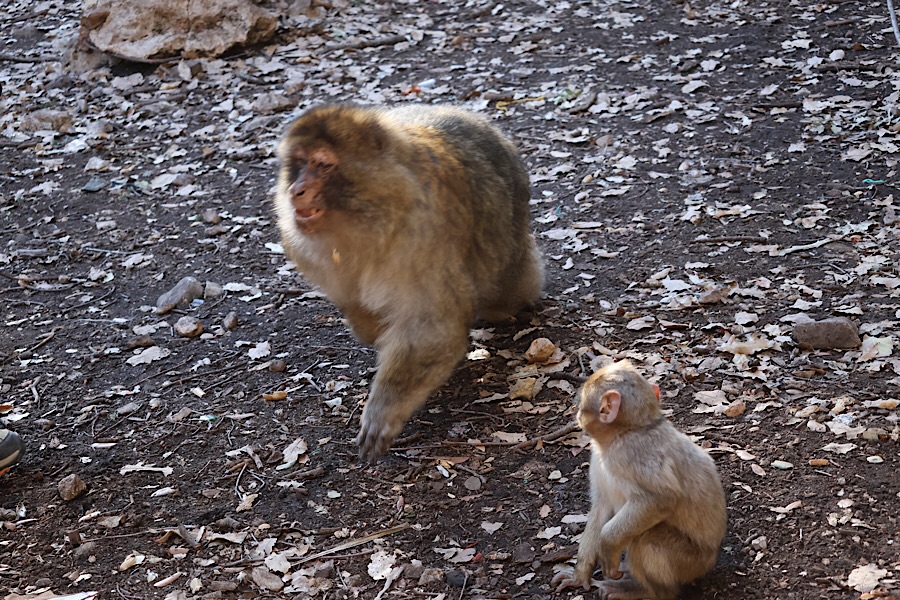


One of the guys warned us to put the bag of nuts into a pocket and we soon learned how bold these monkeys have become when one large monkey grabbed Kevin’s shorts to beg for a peanut. Kevin used the diversion of the peanut to detach its hand and received bared teeth for his troubles! We decided that was probably as close as wanted to get and headed back to the truck, probably just in time as we saw they had trampled all over a car next to ours. They are probably not as bad as the Gibraltar macaques who literally mug people getting off the cable car for food, however, they are heading in that direction!
Finally it was time to head to Fes, this being the one city I’d been keen to visit before we came. A campsite right on the outskirts and within easy reach of the ring road was a good choice, as demonstrated by the number of other vans / overlanders there. It was late afternoon by the time we parked up, so we decided to head into the city the next day.
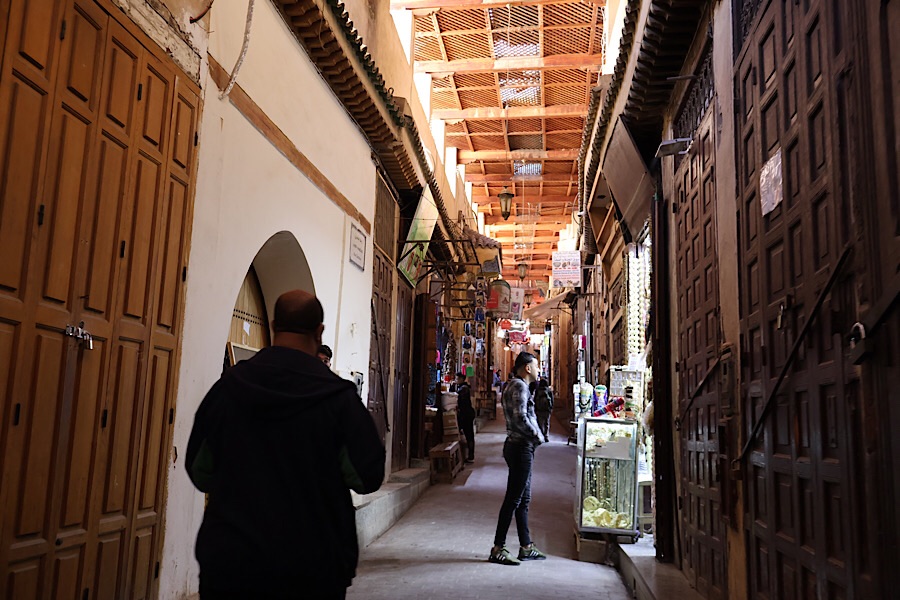
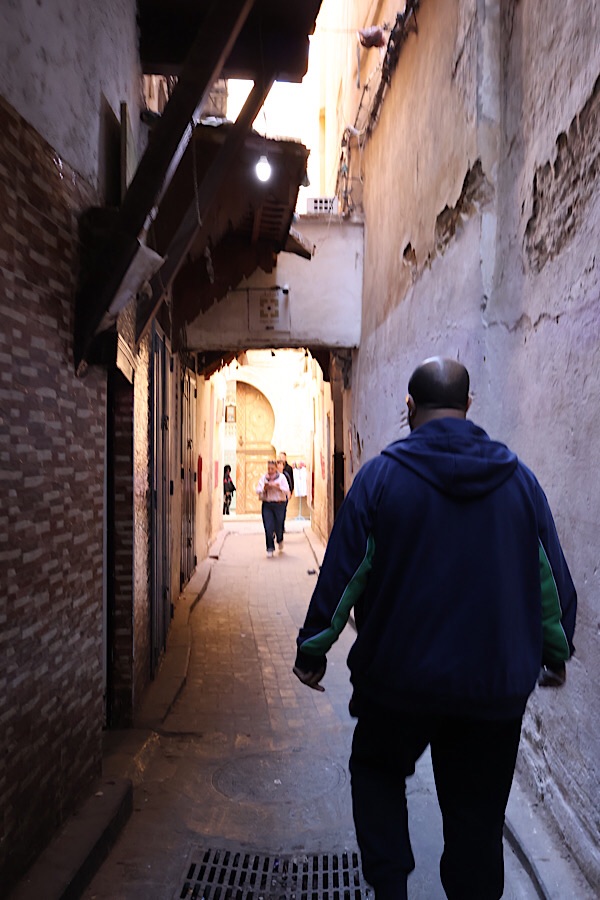
We had not realised the next day was Friday, the holy day in Morocco. There is a small booth on the edge of the camping which offer guided tours and taxis and we decided that would be easiest. We were very pleased we had a guide when we got to the medina. The medina is the oldest in Morocco, Fes was founded in the 9th century and reached its height in the 13-14th century the medina growing through that time. We saw just how narrow and winding the streets are. We saw several which were only wide enough for one person to walk through at a time. The whole area of 540 acres is UNESCO protected. We were very pleased not to have to navigate ourselves.
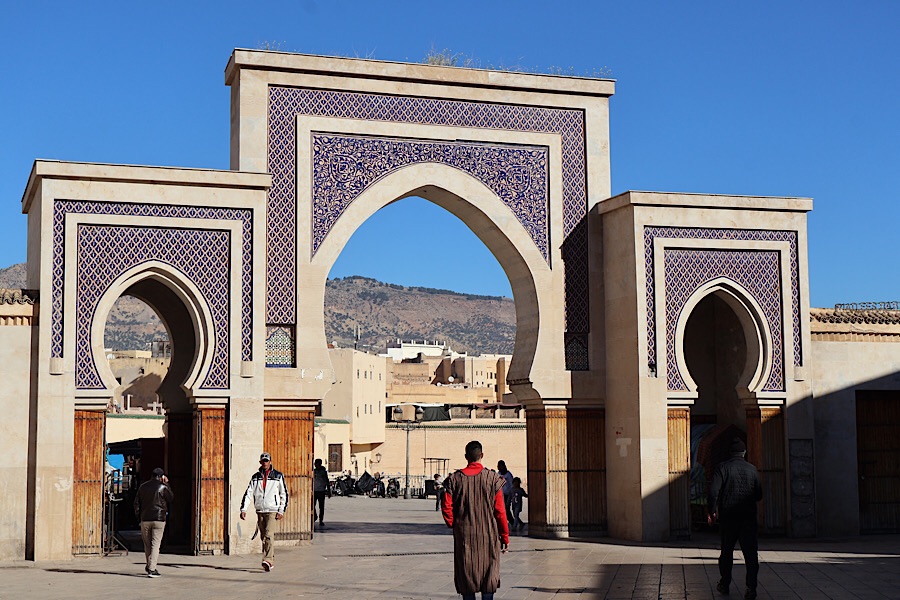
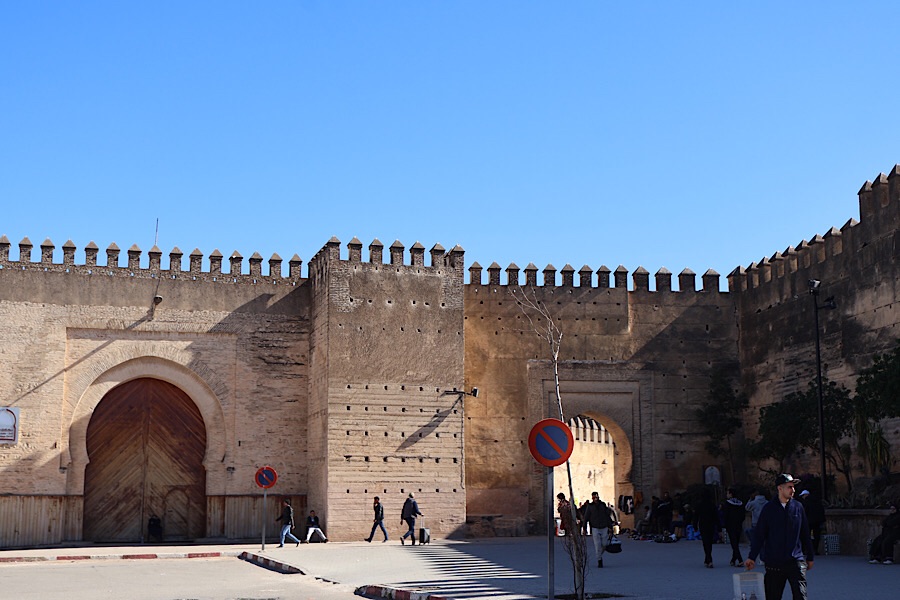
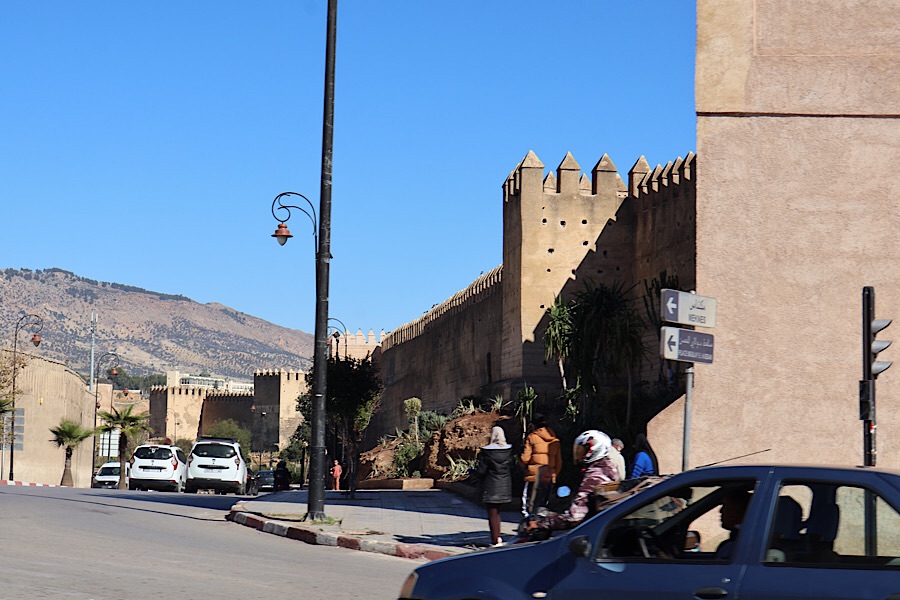

This medieval town centre is still very much the bustling heart of Fes today. Unlike Marrakesh, there was certainly more locals buying at the medina than tourists. As it was Friday, many of the shops were closed though, which to be honest suited us very well, it was far nicer to wonder round without the usual hustle and bustle. I loved looking down the little alleyways and peeking in doors, just amazed at how much concentrated housing / commercial property could be squeezed into this space. We saw some redevelopment work occurring and all the building materials arriving by donkey as there was no way any mechanised transport could get that far down the alleyways.


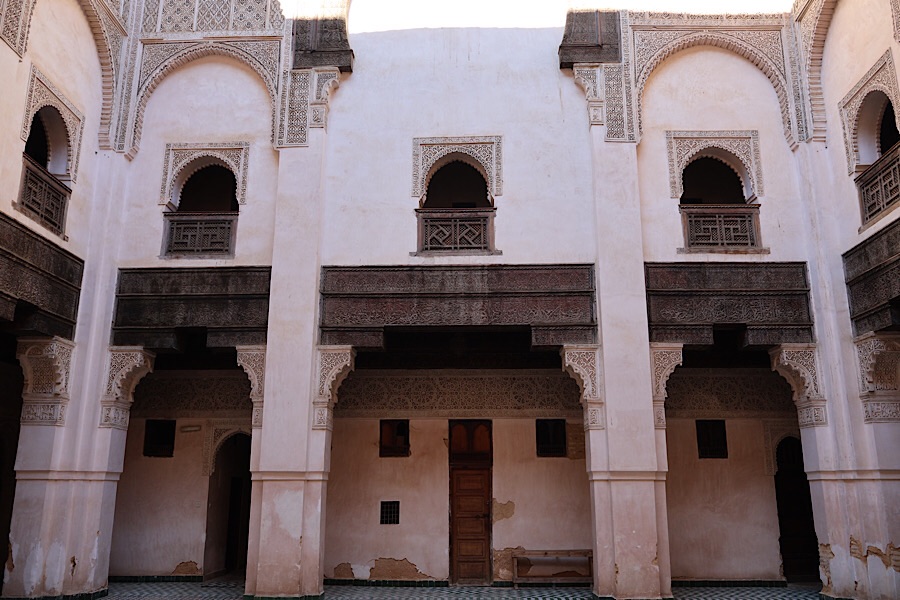
We saw the El Acharatine Medrassa, built in 1323-25, like the one I saw in Marrakesh but without the renovations. However, the amazing craftsmanship of the Marinid architecture had certainly stood the test of time with the ornate carved cedar wood and plasterwork and handmade geometric tiling. These buildings were early universities mainly for Islamic studies, but also law and science. The small dormitories and inbuilt mosque forming a real picture of life for these scholars, all there by merit and not fortune.



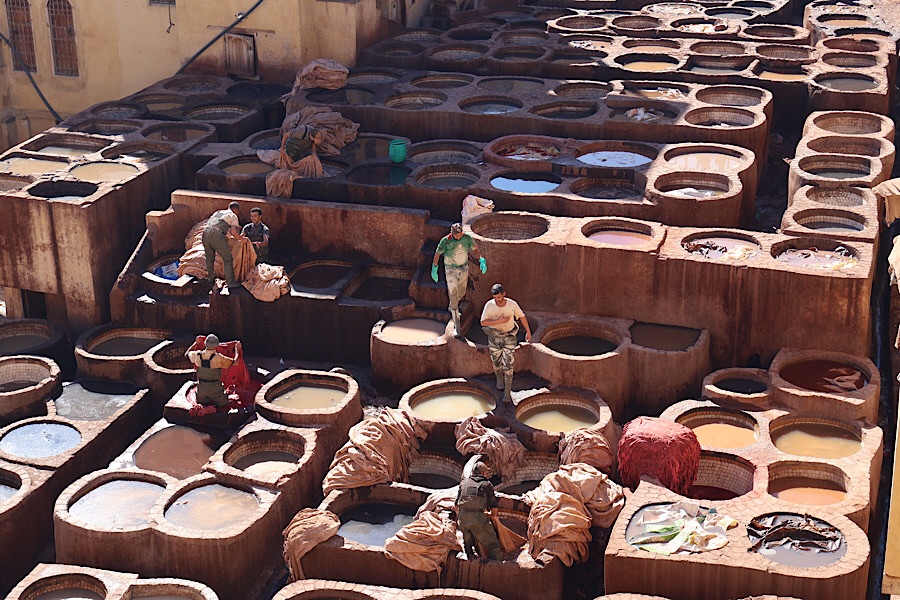
The highlight of the tour was undoubtedly the Chaouwara tanneries, built in the 11th century and very much still operated in the same way ever since, treating, colouring and drying goat, camel, sheep and cow hides. Access to visit is via balconies overlooking the tanneries owned by the various leather shops.
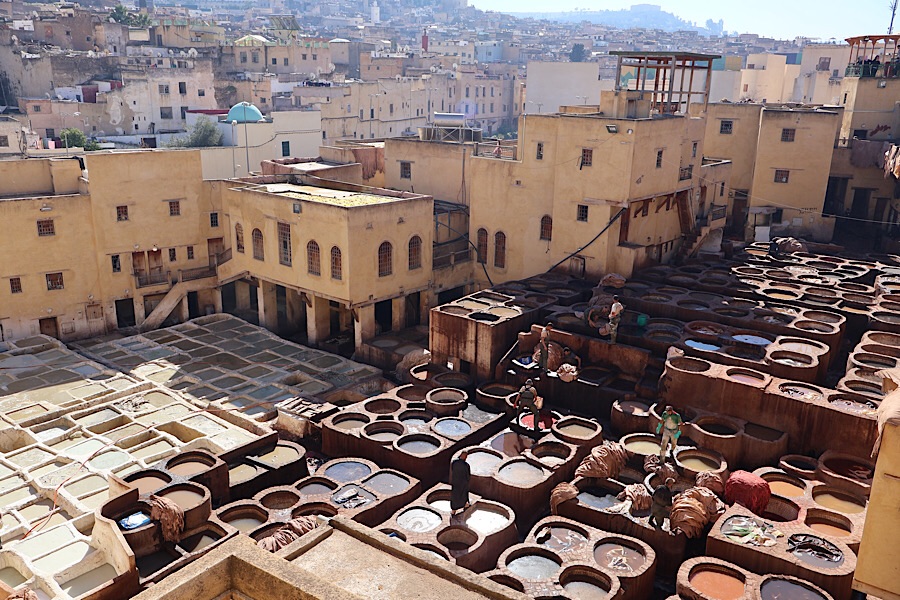
There was genuinely no pressure to buy even though they provided a tour and a sprig of mint to help deflect the smell, which was to be honest not as bad as expected. It is probably one of the most photographed places in Morocco and it was a little surreal to see them in person. All the guys were very hard at work there, what a backbreaking living that must be.


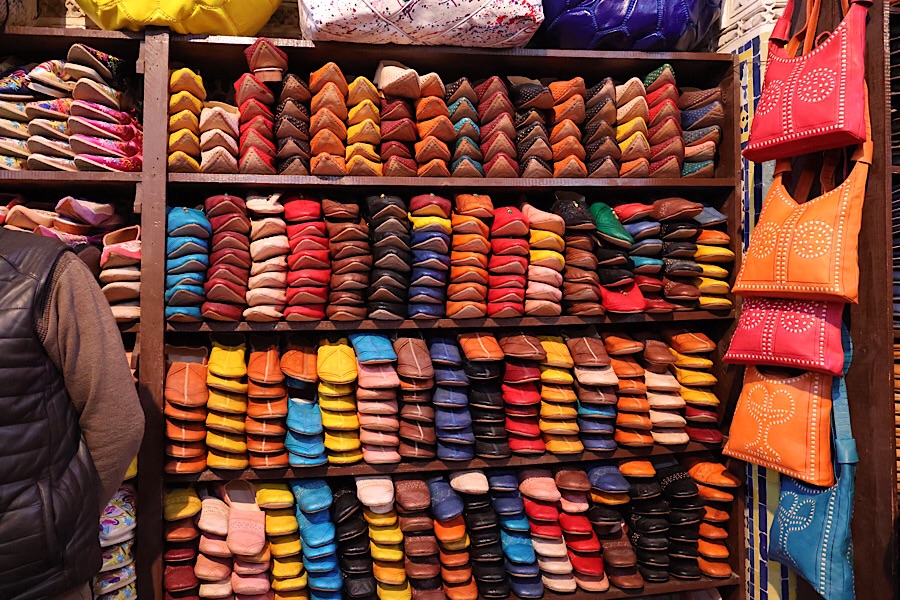

We also visited a weaving / fabric shop and Berber pharmacy / spice shop arranged by the guide who handed us over for a tour and a bit of sales pater. It was all good humoured though and having bought spices in Marrakesh and Argan Oil In Essaouira valley, where it is made, we were not pressured into buying more.

After our Fes tour we decided we were touristed-out and that we would leave the ruins at Volubilis for our next visit. We have really quite a detailed itinerary for that trip already and if we weren’t doing the PanAmerican Highway, we would certainly be back next winter. However, as that trip is getting ever closer, we felt we really should head towards the ferry. Therefore today, we drove about 400km to a restaurant with camping just north of Asilah ready to strike for the ferry. Hopefully they will let me and the dogs back in after the Spanish border police neglected to stamp me out and we keep hearing rumours of changes for British dogs re-entering EU. Fingers crossed!

 In for a Penney